
Zhebenki: Difference between revisions
No edit summary |
No edit summary |
||
| Line 52: | Line 52: | ||
Babies will enter a state of deep, coma-like torpor once they have accumulated enough food, which is usually after their 60th day of life. They will remain in this state for around 200 Zoan days, in which they must be kept in low light. While under torpor, colloquially and often comically called a "food coma," babies will begin rapidly growing into a slightly longer and more articulated infant form. Upon waking, they are able to walk, eat solid foods with ease, and begin vocalising. | Babies will enter a state of deep, coma-like torpor once they have accumulated enough food, which is usually after their 60th day of life. They will remain in this state for around 200 Zoan days, in which they must be kept in low light. While under torpor, colloquially and often comically called a "food coma," babies will begin rapidly growing into a slightly longer and more articulated infant form. Upon waking, they are able to walk, eat solid foods with ease, and begin vocalising. | ||
Zhebenki enter adolescence at about their 5th Zoan year (~10 Earth years), when hormonal shifts cause them to enter puberty. Hormonal shifts plateau at around 8 Zoan years, when adulthood is thought to begin. Elderly age starts at around the 19th year. Zhebenki have an average life expectancy of 26 Zoan years (~50 Earth years).{{Sophonts}} | Zhebenki enter adolescence at about their 5th Zoan year (~10 Earth years), when hormonal shifts cause them to enter puberty. Hormonal shifts plateau at around 8 Zoan years, when adulthood is thought to begin. Elderly age starts at around the 19th year. Zhebenki have an average life expectancy of 26 Zoan years (~50 Earth years). | ||
== Behaviour == | |||
=== Circadian rhythm === | |||
Zhebenki are active during the night, and will sleep during most of the day. Sleep cycles last about 7 to 9 hours of a ~26,5 hour Zoan day. | |||
=== Territoriality === | |||
A characteristic frequently stereotyped by other sophonts is zhebenki's tendency to be zealously territorial. A zhebenki's home turf gets protected and cared for very diligently, contributing to a "paranoid neat freak" stereotype. This is heightened during pregnancy, mothers-to-be often getting tense and aggressive at strangers who get too close to them. However, the intensity of these behaviours depends largely from individual to individual, and not all zhebenki will react the same way.{{Sophonts}} | |||
Revision as of 20:52, 20 January 2026
| Zhebenki | |
|---|---|

| |
| Reference showing a zhebenki's face, body, hand and open mouth. Art by Camille. | |
| Scientific classification | |
| Domain: | Zoakaryota
|
| Kingdom: | Zoazoa
|
| Phylum: | Vellutata
|
| Class: | Captiatores
|
| Order: | Furittoidea
|
| Family: | Zebenchidae
|
| Genus: | |
| Species: | Zebenchis zebenchis
|
| Binomial name | |
| Zebenchis zebenchis | |
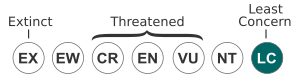
Zhebenki (sg. and pl.), binomial Zebenchis zebenchis, are the native sophonts of Celiane. They are characterised by their short stature, on average reaching about half a metre standing on their hind legs, their semi-aquatic lifestyle, and sophonce. They are primarily predatory animals, having evolved such features as vertical slit pupils and heat pits for infrared sensing.
Appearance
Body
Zhebenki possess four limbs, all used in locomotion, though their front limbs may be used for manipulating their environment. Their hands and feet are mostly symmetrical and possess six fingers each, tipped with long, blunt claws and big, round pads. Their bodies superficially resemble those of mustelids. They are cylindrical, with a tapering snout and tail. They possess fins on the cheeks, forehead, back and sides that, although helpful in swimming, are mostly used in emoting, and whiskers used in chemoreception.
Head
The head of a zhebenki possesses two oblong eyes, four fins, two on the cheeks and two on the forehead, a pair of ears, a pair of nostrils on the forehead, and a mouth with three jaws, one on top and two on the bottom. At the tip of the snout sit eight heat pits, used in sensing the infrared light emitted by prey during the night.
Eye colour
Zhebenki eye colour varies between reds, pinks, browns, greens and blues. Which colour is more prevalent in any given area depends highly on ethnic group
Coloration
A zhebenki's skin is pigmented by melanin, so it varies between pink flesh tones, dark browns and blacks. Certain patches of skin, particularly their pawpads and the tips of their fins, present coloration tending more towards pink. Their fur varies in pattern and its coloration may include whites, blacks, browns, reds, pinks and greys.
Biology
Blood and respiration
Zhebenki blood makes use of a mix of iron and copper-based compounds, and it is a mild violet when exposed to oxygen. It remains colourless when deoxygenated. Zhebenki lungs are located in the medial area of their body, and take up a significant amount of space. While underwater, they may hold their breath for extended periods of time, up to 30 minutes.
Diet
Zhebenki are hypercarnivores—that is, they require a significant amount of animal content in their diet, over 70% to be precise. Zhebenki diets are piscivorous, and they mostly subsist on the aquatic animals they catch. To supplement their diet, they eat invertebrates, some fruits and berries, and small land animals.
Urination and excretion takes place out of the same orifice, located under the genitals.
Reproduction and ageing

The genitalia of male zhebenki are often described "scary" due to their partial bifurcation, length, and spines. This is to ensure insemination within the female's bicameral uterus, which must be entered through a similarly long vaginal canal.
Zhebenki will usually have litters of 4 to 6 babies. Gestation in zhebenki is remarkably short; only about 156 Zoan days (~172 Earth days, i.e. around 5~6 months). Baby zhebenki, small but very active, subsist on solid food from the moment they are born. To make digestion easier, food is liquefied or crushed beforehand. Ancestrally, this was done by the parent masticating and subsequently regurgitating food for them; however, this is not the case for a great majority of parents in the modern day, who prefer instead to blend and crush their food mechanically out of a preoccupation with hygiene.
Babies will enter a state of deep, coma-like torpor once they have accumulated enough food, which is usually after their 60th day of life. They will remain in this state for around 200 Zoan days, in which they must be kept in low light. While under torpor, colloquially and often comically called a "food coma," babies will begin rapidly growing into a slightly longer and more articulated infant form. Upon waking, they are able to walk, eat solid foods with ease, and begin vocalising.
Zhebenki enter adolescence at about their 5th Zoan year (~10 Earth years), when hormonal shifts cause them to enter puberty. Hormonal shifts plateau at around 8 Zoan years, when adulthood is thought to begin. Elderly age starts at around the 19th year. Zhebenki have an average life expectancy of 26 Zoan years (~50 Earth years).
Behaviour
Circadian rhythm
Zhebenki are active during the night, and will sleep during most of the day. Sleep cycles last about 7 to 9 hours of a ~26,5 hour Zoan day.
Territoriality
A characteristic frequently stereotyped by other sophonts is zhebenki's tendency to be zealously territorial. A zhebenki's home turf gets protected and cared for very diligently, contributing to a "paranoid neat freak" stereotype. This is heightened during pregnancy, mothers-to-be often getting tense and aggressive at strangers who get too close to them. However, the intensity of these behaviours depends largely from individual to individual, and not all zhebenki will react the same way.