
Yupangir: Difference between revisions
No edit summary |
No edit summary |
||
| (5 intermediate revisions by the same user not shown) | |||
| Line 1: | Line 1: | ||
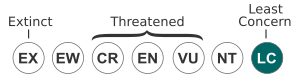
{{Taxobox|image=Yupangir.png|image_alt=|image_caption=Sketch of a yupangir. {{metainf|Art by [[User:Maxisnt|Camille]].}}|status=LC|status_system=iucn3.1|domain=TBD|regnum=Atavalpazoa|phylum= | {{Taxobox|image=Yupangir.png|image_alt=|image_caption=Sketch of a yupangir. {{metainf|Art by [[User:Maxisnt|Camille]].}}|status=LC|status_system=iucn3.1|domain=TBD|regnum=Atavalpazoa|phylum=Anellata|classis=Papparia|ordo=Dolichodactylia|familia=Jupangidae|genus=''[[Jupangir]]''|species='''''J. jupangir'''''|binomial=''Jupangir jupangir''|synonyms=|range_map=|range_map_caption=}} | ||
'''Yupangir''' (singular and plural; '''''Jupangir jupangir''''') are the native sophonts of [[Atahualpa]], the second of two planets around star [[Inti]]. They are [[Papparia|papparians]], that is, they possess [[Pappary gland|pappary glands]] on their backs that, in females, produce a thick, fatty substance rich in nutrients called [[papmilk]], which they feed their offspring during their early infancy. | '''Yupangir''' (singular and plural; '''''Jupangir jupangir''''') are the native sophonts of [[Atahualpa]], the second of two planets around star [[Inti]]. They are [[Papparia|papparians]], that is, they possess [[Pappary gland|pappary glands]] on their backs that, in females, produce a thick, fatty substance rich in nutrients called [[papmilk]], which they feed their offspring during their early infancy. | ||
| Line 9: | Line 9: | ||
=== Body === | === Body === | ||
The body of a yupangir is, like that of [[Gorm|gorms]], centaurist; that is, they possess a prebody and a postbody. The prebody includes the head and arms, and the postbody the legs, tails and genitalia, along with most of the more important internal organs. | The body of a yupangir is, like that of [[Gorm|gorms]], centaurist; that is, they possess a prebody and a postbody. The prebody includes the head and arms, and the postbody the legs, tails and genitalia, along with most of the more important internal organs. They are covered in bristly, coarse fur, usually patterned with spots or stripes, coloured with various browns, yellows, oranges, reds and other earthy colours, along with whites, greys and blacks. They are about 1,80 m on all fours on average. | ||
=== Head === | |||
The head of a yupangir is blocky, with a wide, rectangular snout that blends seamlessly with the rest of the head—the nasal ridge is almost negligible in most individuals. They possess four eyes, all employed in vision. The main pair is capable of sensing a trichromatic spectrum and move freely within their orbits, while the small ''prenasal ocella'' can mostly only see in infrared. Their nose is pointed and exposed without fur, and extremely sensitive. They possess two triangular ears. Their mouth possesses three lips, giving them a "cleft lip" appearance, although for them this is typical. Their inner mouth is equipped with sharp teeth in the front for tearing meat, and blunter teeth in the back for crushing bone. Attached to their lower jaw is a long, pointed tongue. Moving focus to the nape, they possess a mane of longer fur. Through piloerection, this mane is useful in emoting. | |||
=== Limbs === | |||
Yupangir possess six, technically eight limbs: an arm on either side of the prebody, two pairs of legs on either side of the postbody, and two tail-like post-anal limbs on their derriere, used in balance an emoting. Their hands and feet possess three fingers each, with their hands possessing a long thumb with a larger claw. | |||
== Biology == | |||
=== Blood and respiration === | |||
Yupangir possess a large heart in their central postbody, which pumps manganese-based deep-brown blood. | |||
=== Diet === | |||
The diet of a yupangir consists mostly of meat and bone, along with other animal products, as they are hypercarnivores. They supplement these animal-heavy diets with grains, fruit, and small invertebrates. | |||
=== Reproduction and ageing === | |||
Yupangir are highly sexually dimorphic. Males are large and usually present darker fur colours and more pronounced patterns, while females are smaller and more lightly coloured. Males possess a penis that lays flaccid when unaroused, and takes a more cylindrical shape when erect. Females possess a thick membrane that protects their vaginal canal, similar to a hymen, which must be pierced before their first coitus can take place. This is done through tearing with the thumb claw (or less commonly the teeth), usually by the male. | |||
Gestation lasts for ~520 Atahualpan days. Immediately after birth, yupangir cubs (usually two) climb on their mother's back and begin consuming papmilk. They do this for their first two years, after which they wean and become young infants. Yupangir are considered infants from 2 to 11, sub-adults from 11 to 20, adults from 20 to 50, and elderly onwards. The average life expectancy of a yupangir is about 70 Atahualpan years (~110 [[Earth]] years). | |||
== Behaviour == | |||
=== Life-long monogamy and sexual conservatism === | |||
Yupangir are known for their extreme monogamy, often being described as even more exclusive than that of [[Human|humans]]. Having reached mating age (19~20 Atahualpan years), yupangir of both sexes will begin seeking mating partners, with whom they will remain until death. Due to this, many have an instinctual aversion towards any form of non-marital promiscuity, which is suppressed at a societal level. Non-monogamy, homosexuality, exophilia, asexuality-aromanticity, etc. are all considered forms of sexual deviancy, and individuals exhibiting these behaviours are shunned. Masturbation (especially that of males) and porn are similarly looked down upon. | |||
Yupangir, once mated, can become extremely territorial and possessive. Any form of adultery is reason enough for a fight to the death with a perpetrating outside individual putting the relationship in jeopardy. Dissolution of lifelong monogamous pairs are extremely distressing, to the point of profound depression, and are as such looked down upon. | |||
In recent times, societal trends towards sexual liberation have become much more lax, with homosexuality and exophilia especially being reframed in a more positive light. However, conservatism is still a hallmark of yupangir society, and many yupangir still hold the belief that the golden standard should be a male and a female of the same species mated for life.{{Sophonts}} | |||
Latest revision as of 17:53, 4 July 2026
| Yupangir | |
|---|---|

| |
| Sketch of a yupangir. Art by Camille. | |
| Scientific classification | |
| Domain: | TBD
|
| Kingdom: | Atavalpazoa
|
| Phylum: | Anellata
|
| Class: | Papparia
|
| Order: | Dolichodactylia
|
| Family: | Jupangidae
|
| Genus: | |
| Species: | J. jupangir
|
| Binomial name | |
| Jupangir jupangir | |
Yupangir (singular and plural; Jupangir jupangir) are the native sophonts of Atahualpa, the second of two planets around star Inti. They are papparians, that is, they possess pappary glands on their backs that, in females, produce a thick, fatty substance rich in nutrients called papmilk, which they feed their offspring during their early infancy.
Names
The name yupangir comes from the Atahualpan Ñerte language ñupangỹrỹ, meaning "from the sand."
Appearance
Body
The body of a yupangir is, like that of gorms, centaurist; that is, they possess a prebody and a postbody. The prebody includes the head and arms, and the postbody the legs, tails and genitalia, along with most of the more important internal organs. They are covered in bristly, coarse fur, usually patterned with spots or stripes, coloured with various browns, yellows, oranges, reds and other earthy colours, along with whites, greys and blacks. They are about 1,80 m on all fours on average.
Head
The head of a yupangir is blocky, with a wide, rectangular snout that blends seamlessly with the rest of the head—the nasal ridge is almost negligible in most individuals. They possess four eyes, all employed in vision. The main pair is capable of sensing a trichromatic spectrum and move freely within their orbits, while the small prenasal ocella can mostly only see in infrared. Their nose is pointed and exposed without fur, and extremely sensitive. They possess two triangular ears. Their mouth possesses three lips, giving them a "cleft lip" appearance, although for them this is typical. Their inner mouth is equipped with sharp teeth in the front for tearing meat, and blunter teeth in the back for crushing bone. Attached to their lower jaw is a long, pointed tongue. Moving focus to the nape, they possess a mane of longer fur. Through piloerection, this mane is useful in emoting.
Limbs
Yupangir possess six, technically eight limbs: an arm on either side of the prebody, two pairs of legs on either side of the postbody, and two tail-like post-anal limbs on their derriere, used in balance an emoting. Their hands and feet possess three fingers each, with their hands possessing a long thumb with a larger claw.
Biology
Blood and respiration
Yupangir possess a large heart in their central postbody, which pumps manganese-based deep-brown blood.
Diet
The diet of a yupangir consists mostly of meat and bone, along with other animal products, as they are hypercarnivores. They supplement these animal-heavy diets with grains, fruit, and small invertebrates.
Reproduction and ageing
Yupangir are highly sexually dimorphic. Males are large and usually present darker fur colours and more pronounced patterns, while females are smaller and more lightly coloured. Males possess a penis that lays flaccid when unaroused, and takes a more cylindrical shape when erect. Females possess a thick membrane that protects their vaginal canal, similar to a hymen, which must be pierced before their first coitus can take place. This is done through tearing with the thumb claw (or less commonly the teeth), usually by the male.
Gestation lasts for ~520 Atahualpan days. Immediately after birth, yupangir cubs (usually two) climb on their mother's back and begin consuming papmilk. They do this for their first two years, after which they wean and become young infants. Yupangir are considered infants from 2 to 11, sub-adults from 11 to 20, adults from 20 to 50, and elderly onwards. The average life expectancy of a yupangir is about 70 Atahualpan years (~110 Earth years).
Behaviour
Life-long monogamy and sexual conservatism
Yupangir are known for their extreme monogamy, often being described as even more exclusive than that of humans. Having reached mating age (19~20 Atahualpan years), yupangir of both sexes will begin seeking mating partners, with whom they will remain until death. Due to this, many have an instinctual aversion towards any form of non-marital promiscuity, which is suppressed at a societal level. Non-monogamy, homosexuality, exophilia, asexuality-aromanticity, etc. are all considered forms of sexual deviancy, and individuals exhibiting these behaviours are shunned. Masturbation (especially that of males) and porn are similarly looked down upon.
Yupangir, once mated, can become extremely territorial and possessive. Any form of adultery is reason enough for a fight to the death with a perpetrating outside individual putting the relationship in jeopardy. Dissolution of lifelong monogamous pairs are extremely distressing, to the point of profound depression, and are as such looked down upon.
In recent times, societal trends towards sexual liberation have become much more lax, with homosexuality and exophilia especially being reframed in a more positive light. However, conservatism is still a hallmark of yupangir society, and many yupangir still hold the belief that the golden standard should be a male and a female of the same species mated for life.