
Gorm: Difference between revisions
No edit summary |
No edit summary |
||
| (5 intermediate revisions by the same user not shown) | |||
| Line 18: | Line 18: | ||
| range_map_caption = | | range_map_caption = | ||
}} | }} | ||
'''Gorms''' (''Xylodraco aphonos'') or '''farthians''' are the sparse inhabitants of [[the Farthest Land]], the only life-harbouring planet of star [[Pnoa]]. They are large, furred centaurist sophonts with tough lignin "masks. | '''Gorms''' (''Xylodraco aphonos'') or '''farthians''' are the sparse inhabitants of [[the Farthest Land]], the only life-harbouring planet of star [[Pnoa]]. They are large, furred centaurist sophonts with tough [[Wikipedia:Lignin|lignin]] rostra (colloquially "masks"). While incapable of speech, they are able to communicate through mid- to high-frequency radio waves, achieving this with a high metal content in their nervous system and two lignin antennae on their back. Their signals remain within a range of 500 to 42000 kHz, called the ''gorm conversational frequencies''. They are peculiar in that they are scant and nearly endangered. | ||
== Appearance == | == Appearance == | ||
| Line 26: | Line 26: | ||
=== Head === | === Head === | ||
The most distinctive feature of a gorm's head is their lignin | The most distinctive feature of a gorm's head is their lignin rostrum, which protects the face from injury; a common display of dominance within gorm cultures is sparring with the horn located at the forehead. They also possess a mouth, which cannot be used to vocalise, and a pair of eyes. Above the eyes sit the transmitter antennae. | ||
=== Coloration === | === Coloration === | ||
| Line 36: | Line 36: | ||
Gorms' blood is primarily composed of [[Wikipedia:haemocyanin|haemocyanin]], a copper-based respiratory pigment. This gives their blood a distinctive blue colour when oxygenated, while deoxygenated blood remains colourless. | Gorms' blood is primarily composed of [[Wikipedia:haemocyanin|haemocyanin]], a copper-based respiratory pigment. This gives their blood a distinctive blue colour when oxygenated, while deoxygenated blood remains colourless. | ||
Gorm lungs are located in their | Gorm lungs are located in their protosomal thorax (a four-bone complex in the anterior prebody). | ||
=== Nervous system === | === Nervous system === | ||
| Line 44: | Line 44: | ||
=== Diet === | === Diet === | ||
Gorms are omnivores with a tendency towards consuming invertebrates and plant-life, | Gorms are omnivores with a tendency towards consuming invertebrates and plant-life, with a lower average consumption of animal meat compared to other sophonts. They require a high amount of copper in their diet to ensure proper function of the nervous system. Their digestive systems, complex, large and highly efficient, take up a large part of their frontal postbody. They are able to break down many things other, less generalist species cannot, mostly through the use of multi-chambered stomachs, long, winding intestinal tracts, and additional digestive organs that produce an expanded repertoire of enzymatic secretions. A consequence of this is that their metabolism is very slow, and they require slower, more evenly spaced food intake to survive. | ||
=== Reproduction and ageing === | === Reproduction and ageing === | ||
Latest revision as of 14:01, 6 May 2026
| Gorm | |
|---|---|

| |
| Fullbody sketch of a Gorm | |
| Scientific classification | |
| Domain: | Bulloidea
|
| Kingdom: | Nektonica
|
| Phylum: | Telepatha
|
| Class: | Plumata
|
| Order: | Centauridae
|
| Family: | Rostrati
|
| Genus: | Xylodraco
|
| Species: | X. aphonos
|
| Binomial name | |
| Xylodraco aphonos | |
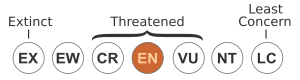
Gorms (Xylodraco aphonos) or farthians are the sparse inhabitants of the Farthest Land, the only life-harbouring planet of star Pnoa. They are large, furred centaurist sophonts with tough lignin rostra (colloquially "masks"). While incapable of speech, they are able to communicate through mid- to high-frequency radio waves, achieving this with a high metal content in their nervous system and two lignin antennae on their back. Their signals remain within a range of 500 to 42000 kHz, called the gorm conversational frequencies. They are peculiar in that they are scant and nearly endangered.
Appearance
Body
Gorms are hexapodal, having six limbs. They display centaurism, their bodies separated into a prebody and postbody. The prebody has the front limbs, arms, usually tucked inwards when not in use. Their hands are symmetrical and "mitten"-like, with three fingers, two of which are opposable thumbs, with a larger finger at the centre. The postbody has the ears at the front, the walking limbs on the sides, and the tail and anogenital area at the back. It also hosts two small lignin antennae at the withers area, which serve as receiver antennae for communication; the transmitter antennae are instead located on their head, just above their eyes.
Head
The most distinctive feature of a gorm's head is their lignin rostrum, which protects the face from injury; a common display of dominance within gorm cultures is sparring with the horn located at the forehead. They also possess a mouth, which cannot be used to vocalise, and a pair of eyes. Above the eyes sit the transmitter antennae.
Coloration
Gorm feather colorations include browns, light blues, whites, greys and blacks. Their skin ranges in the blues, in part because their blood uses copper as its oxygen-binding molecule. The most common eye colour is amber, which is near universal, but some individuals possess eyes ranging in the blues and greens.
Biology
Respiration
Gorms' blood is primarily composed of haemocyanin, a copper-based respiratory pigment. This gives their blood a distinctive blue colour when oxygenated, while deoxygenated blood remains colourless.
Gorm lungs are located in their protosomal thorax (a four-bone complex in the anterior prebody).
Nervous system
Gorms' nervous system is peculiar in that it uses (and is mostly made of) a metal−copper−for electrical transmission. This renders it unusually efficient, and is a common clade trait within phylum Telepatha, evolved specifically for the purpose of sending and receiving radio signals for communication.
The brain, as is common with cephalised organisms, is located inside the head, encapsulated by the skull. Another process, the transmission bundle, chiefly called the "second brain," is located in their deuterosomal thorax, and is more accurately described as a mass of highly specialised neural tissue with the purpose of generating, tuning and sending radio signals from the deuterodorsal or transmitter antennae. The antennae responsible for signal reception are located in the head and directly connect to the brain.
Diet
Gorms are omnivores with a tendency towards consuming invertebrates and plant-life, with a lower average consumption of animal meat compared to other sophonts. They require a high amount of copper in their diet to ensure proper function of the nervous system. Their digestive systems, complex, large and highly efficient, take up a large part of their frontal postbody. They are able to break down many things other, less generalist species cannot, mostly through the use of multi-chambered stomachs, long, winding intestinal tracts, and additional digestive organs that produce an expanded repertoire of enzymatic secretions. A consequence of this is that their metabolism is very slow, and they require slower, more evenly spaced food intake to survive.
Reproduction and ageing
Gorm sexes don't readily correspond to those of other binary-sexed sophonts. What appears to be a "male" at first glance instead produces non-motile ova that are inserted via an ovipositor into the true inseminator sex, which produces motile spermatozoa. Conception takes place inside the inseminator's brood pouch. Male-female terminology doesn't readily correspond to gorms, so the terms lingam for the ovipositor sex and yoni for the pouched sex are used instead.
The genitalia of gorms are located on the posterior postbody. Lingams present a noticeable scrotum (where the ovaries are located) behind an erectile ovipositor, often just called a "penis" despite the inaccuracy of the term. When unaroused, the ovipositor hangs flaccid and mostly retracted into the body, similar to an elmian phallus. It has an erectile medial ring that engorges during orgasm, tying the lingam to the yoni and ensuring the transfer of ova into the brood pouch. Yoni present a slit-shaped pore under the anus, serving as the entrance to the pouch. The long intermediate canal is called the marsupial sphincter.
Intercourse consists in the friction of the ovipositor inside the bumpy lining of the marsupial sphincter until the lingam achieves orgasm, releasing the ova (appearing as soft, sticky bluish pea-sized round pellets mixed with a cloudy translucent viscous liquid) into the pouch for fertilisation. The yoni may experience orgasm as well, but the release of semen is unrelated to it, and instead is a regular occurrence happening every ~60 Farthian days. If insemination doesn't occur, the semen is simply excreted.
Gestation happens entirely within the brood pouch, where 2 to 6 developing offspring feed on a viscous secretion produced by the marsupial lining. This secretion, called gorm syrup, is translucent, yellowish-green, and rich in glucose and proteins essential to development. Once the offspring are about 52 cm in size, they begin exiting the pouch and become more active, displaying a characteristic dense and fluffy natal plumage that is usually solid white or light brown.
A gorm is considered to be a larva from the moment they are fully formed and naked up until they begin growing their plumage around their 24th day of life. The larvae remain in the pouch for around two Farthian years (~133,6 local 16,4 hour days), then begin to explore out of the pouch in their infant form, which lasts up until their 20th Farthian year (~5 Earth years). From 21 to 48 they are considered children, up until they start undergoing hormonal processes that begin sexual development, at which point they are considered adolescent. Adolescence lasts for 90 years, when physical and hormonal development plateau, rendering the individual an adult. Elderly age is traditionally considered to start at the 260th Farthian year (~65 Earth years).
Behaviour
Communication
Gorm are part of phylum Telepatha, and therefore communicate through the use of short-range radio signals. Vocal communication is impossible as they both do not possess vocal chords and are obligate nasal respirators. Radio signal communication is often supplemented by body language, though facial expression is limited. This has given gorms a reputation for being "emotionless," when in reality they are able to experience emotion just as strongly as other sophonts, they just don't have the muscular processes to express it as easily as other species.
Sleep cycle
Gorms sleep noticeably little compared to other sophonts, only 5 to 6 hours of their ~16 hour day.