
Gorm: Difference between revisions
No edit summary Tags: Reverted Visual edit |
No edit summary Tags: Manual revert Visual edit |
||
| Line 1: | Line 1: | ||
{{Taxobox | |||
| image = Gorm.png | | image = Gorm.png | ||
| image_alt = | | image_alt = | ||
Revision as of 12:33, 16 October 2025
| Gorm | |
|---|---|

| |
| Fullbody sketch of a Gorm | |
| Scientific classification | |
| Domain: | Bulloidea
|
| Kingdom: | Nektonica
|
| Phylum: | Telepatha
|
| Class: | Galactea
|
| Order: | Centauridae
|
| Family: | Rostrati
|
| Genus: | Xylodraco
|
| Species: | X. aphonos
|
| Binomial name | |
| Xylodraco aphonos | |
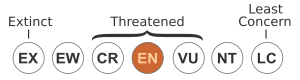
Gorms (Xylodraco aphonos) are the sparse inhabitants of the Farthest Land, the only life-harbouring planet of star Pnoa. They are large, furred centaurist sophonts with tough lignin "masks." While incapable of speech, they are able to communicate through mid- to high-frequency radio waves, achieving this with a high metal content in their nervous system and two lignin antennae on their back. Their signals remain within a range of 500 to 42000 kHz, called the gorm conversational frequencies. They are peculiar in that they are scant and nearly endangered.
Appearance
Body
Gorms are hexapodal, having six limbs. They display centaurism, their bodies separated into a prebody and postbody. The prebody has the front limbs, arms, usually tucked inwards when not in use. Their hands are symmetrical and "mitten"-like, with three fingers, two of which are opposable thumbs, with a larger finger at the centre. The postbody has the ears at the front, the walking limbs on the sides, and the tail and anogenital area at the back. It also hosts two small lignin antennae at the withers area, which serve as receiver antennae for communication; the transmitter antennae are instead located on their head, just above their eyes.
Head
The most distinctive feature of a gorm's head is their lignin "mask," which protects the face from injury; a common display of dominance within gorm cultures is sparring with the horn located at the forehead. They also possess a mouth, which cannot be used to vocalise, and a pair of eyes. Above the eyes sit the transmitter antennae.
Coloration
Gorm fur colorations include browns, light blues, whites, greys and blacks. Their skin ranges in the blues, in part because their blood uses copper as its oxygen-binding molecule. The most common eye colour is amber, which is near universal, but some individuals possess eyes ranging in the blues and greens.